


Qi, Prana, Life Force: Why So Many Cultures Developed a Language for Vital Energy
Qi, prana, ki, vital force—cultures around the world developed language for the animating quality of life. Explore what these traditions actually mean, where they overlap, and why they should not be reduced to modern scientific terms too quickly.
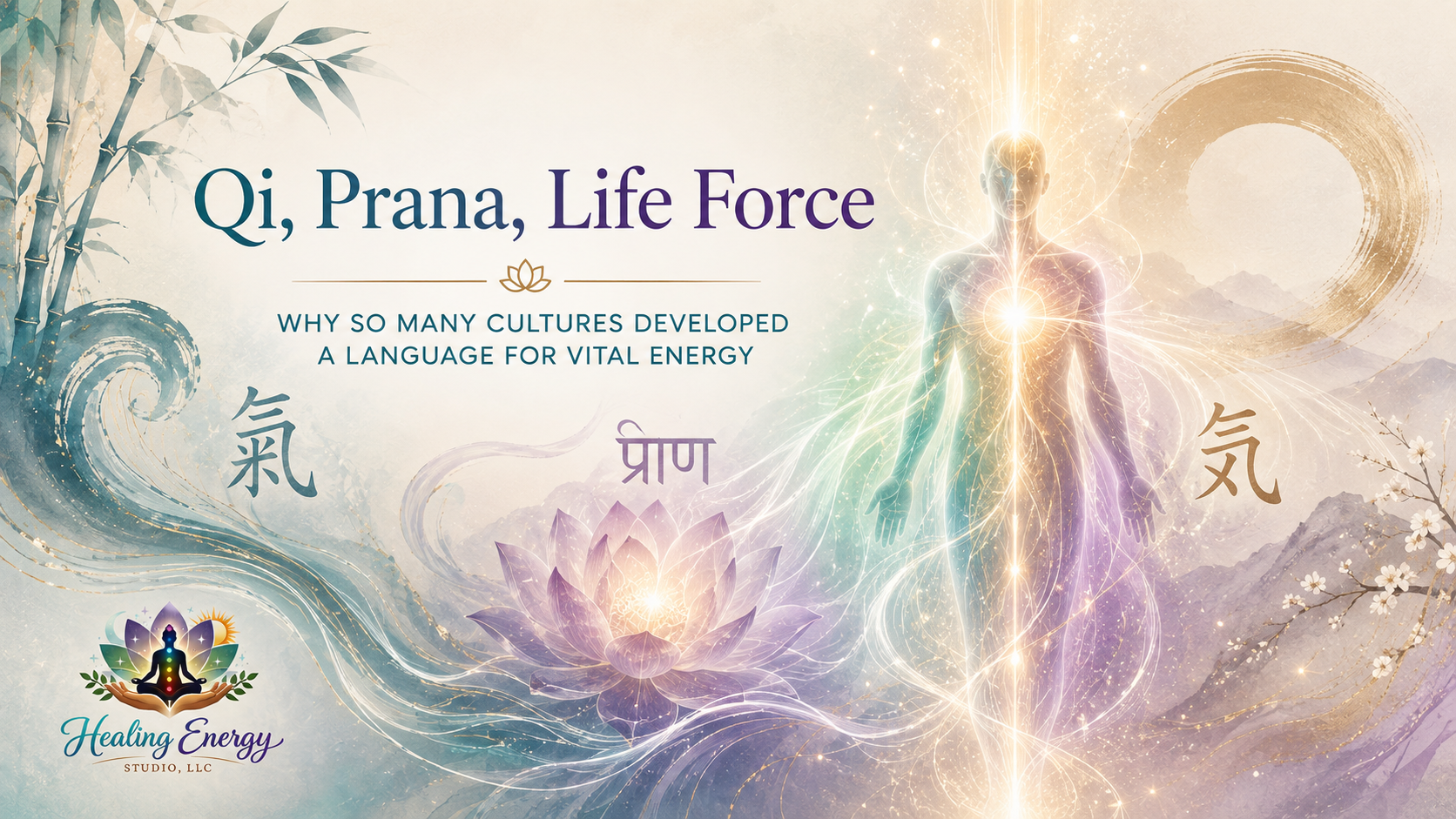
Across cultures that developed thousands of miles apart, people created language for something they experienced as vital, animating, and deeply connected with health and life.
In China, that language includes qi.
In India, prana.
In Japan, ki.
Other traditions have used terms such as vital force, breath of life, spirit, or life energy.
The words are not identical, and the traditions behind them should not be collapsed into one idea.
But the recurrence of these concepts across cultures raises a fascinating question:
Why did so many human traditions come to describe life as more than matter alone?
QI: MORE THAN A SIMPLE TRANSLATION
In Chinese philosophy and medicine, qi is a foundational concept.
It is often translated into English as “energy” or “life force,” but those translations can oversimplify the original meaning.
Qi has been used historically in ways that include breath, vitality, movement, transformation, material process, and the dynamic activity through which life and the natural world are organized.
That is worth remembering.
When we use the word energy in English, we may think immediately of electricity or physics.
Traditional qi language belongs to a different intellectual framework.
PRANA: BREATH, VITALITY, AND LIFE
Prana comes from Indian philosophical and yogic traditions.
It is often translated as vital energy, life force, or breath.
In yoga, prana is closely connected with breathing, but it is not limited to oxygen or the mechanical act of respiration.
Traditional yogic teachings describe prana as a subtle life-sustaining principle that moves through the body and is influenced by breath, attention, posture, and practice.
Pranayama—the yogic discipline of working with breath—is named from the same root.
That research does not prove prana as a measurable physical substance.
It does show that the experience and language of prana remain meaningful enough to study systematically.
KI: THE JAPANESE LANGUAGE OF VITAL ENERGY
The “ki” in Reiki is related linguistically and culturally to the Chinese concept of qi.
Japanese culture uses the character in many words connected with mood, vitality, atmosphere, spirit, and condition.
In Reiki, ki is commonly explained as life energy or vital energy.
That is one reason Reiki is often translated as “universal life energy.”
Again, translation gives us a useful doorway, but not a perfect equivalence.
The concept carries cultural meaning that is difficult to fit neatly into one English word.
WHY BREATH APPEARS SO OFTEN
One of the most interesting patterns across traditions is the connection between life energy and breath.
That makes intuitive sense.
Breathing is one of the clearest signs of life.
Breath changes with emotion.
Breath changes with exertion.
Breath changes with fear, rest, sleep, grief, prayer, meditation, and pain.
And unlike most physiological processes, breathing sits in a unique place between voluntary and automatic control.
We breathe without thinking about it, but we can also intentionally change how we breathe.
Ancient traditions may not have used modern language about autonomic regulation, carbon dioxide, vagal signaling, or respiratory chemistry.
But they had direct access to the experience of breath and its effects on state.
That alone may help explain why breath became one of humanity’s oldest bridges between body and spirit.
ARE QI, PRANA, AND BIOELECTRICITY THE SAME THING?
No one can responsibly say that they are.
Bioelectricity refers to measurable electrical properties of living cells and tissues.
Qi and prana come from traditional philosophical and healing systems with much broader meanings.
It is tempting to translate ancient concepts directly into modern physiology, but doing so can flatten both sides.
The fact that cells have membrane potentials does not prove qi.
The fact that the heart generates an electromagnetic field does not prove prana.
The fact that Reiki uses the word ki does not mean Reiki energy has been identified as a known electromagnetic phenomenon.
Those distinctions matter.
But distinction does not mean the traditions have nothing to say to one another.
A QUESTION OF LANGUAGE
Imagine two people standing beside the same river.
One describes water temperature, flow rate, mineral content, and pressure.
The other describes the river as cleansing, powerful, sacred, alive, or emotionally meaningful.
Are they talking about the same river?
Yes.
Are they saying the same thing?
No.
One language does not automatically replace the other.
Traditional energy systems and modern physiology may sometimes work like that.
Science asks for measurable mechanisms.
Traditional systems often describe patterns of lived experience, balance, relationship, movement, and meaning.
Some concepts may eventually overlap with measurable biology.
Others may remain symbolic, experiential, philosophical, or spiritual.
We do not have to force every word into a laboratory category in order to learn from it.
WHY SO MANY CULTURES NOTICED “VITALITY”
Human beings have always been able to observe the difference between a living body and a dead one.
The structure may still be present, but something unmistakable has changed.
Breath stops.
Warmth changes.
Movement ceases.
Responsiveness disappears.
Presence feels different.
Long before physiology could describe ATP, ion gradients, metabolism, neural firing, circulation, or oxygen exchange, people needed language for the quality that seemed to animate life.
It is not surprising that cultures created concepts of vitality.
What is remarkable is how persistent those concepts have been.
Western history has its own versions: vitalism, vital force, animal magnetism, and other theories attempted to explain what made living systems different from nonliving matter.
Many of those historical theories were later replaced or revised as biology developed.
But the deeper question—what makes a living system organized, responsive, self-repairing, and conscious—has not disappeared.
SCIENCE HAS EXPLAINED MUCH, BUT NOT EVERYTHING
Modern biology has explained an extraordinary amount about how life functions.
We know about cellular respiration, genetics, metabolism, electrophysiology, signaling pathways, immune responses, and development.
We can measure many processes ancient healers could only observe indirectly.
But explaining mechanisms does not necessarily exhaust the human experience of being alive.
Consciousness remains mysterious.
The way meaning changes physiology is still being studied.
The body’s ability to organize itself across billions of cells continues to reveal new layers of complexity.
So I do not see ancient energy concepts as competitors to science.
I see them as part of humanity’s long attempt to describe life.
Some of those descriptions may eventually map onto measurable physiology.
Some may not.
Some may have value precisely because they describe experience rather than mechanism.
THE VALUE OF NOT RUSHING THE TRANSLATION
There is a temptation in wellness spaces to say, “Qi is electricity,” or “prana is the biofield,” or “ancient people already knew quantum physics.”
I do not think we need those claims.
They make the conversation smaller, not bigger.
Ancient traditions deserve to be understood on their own terms.
Science deserves to be represented accurately.
And mystery deserves to remain mystery when we do not yet know.
The more interesting question is not, “Which ancient word is secretly the modern scientific term?”
The more interesting question is:
What were people noticing that led them, again and again, to describe life as movement, breath, vitality, flow, and connection?
That question can stay open.
And I think there is wisdom in leaving it open long enough to really listen.
SOURCES FOR CURIOUS READERS
Kim M. Understanding Qi: Its Development and Clinical Application to Nursing Practices. 2008.

Reiki Is Not a Religion: What It Is, What It Asks of You, and What It Does Not
Reiki is spiritual, but it is not a religion. It does not require conversion, worship, or belief in a particular deity. Learn what Reiki actually asks of the person receiving it—and what it does not.
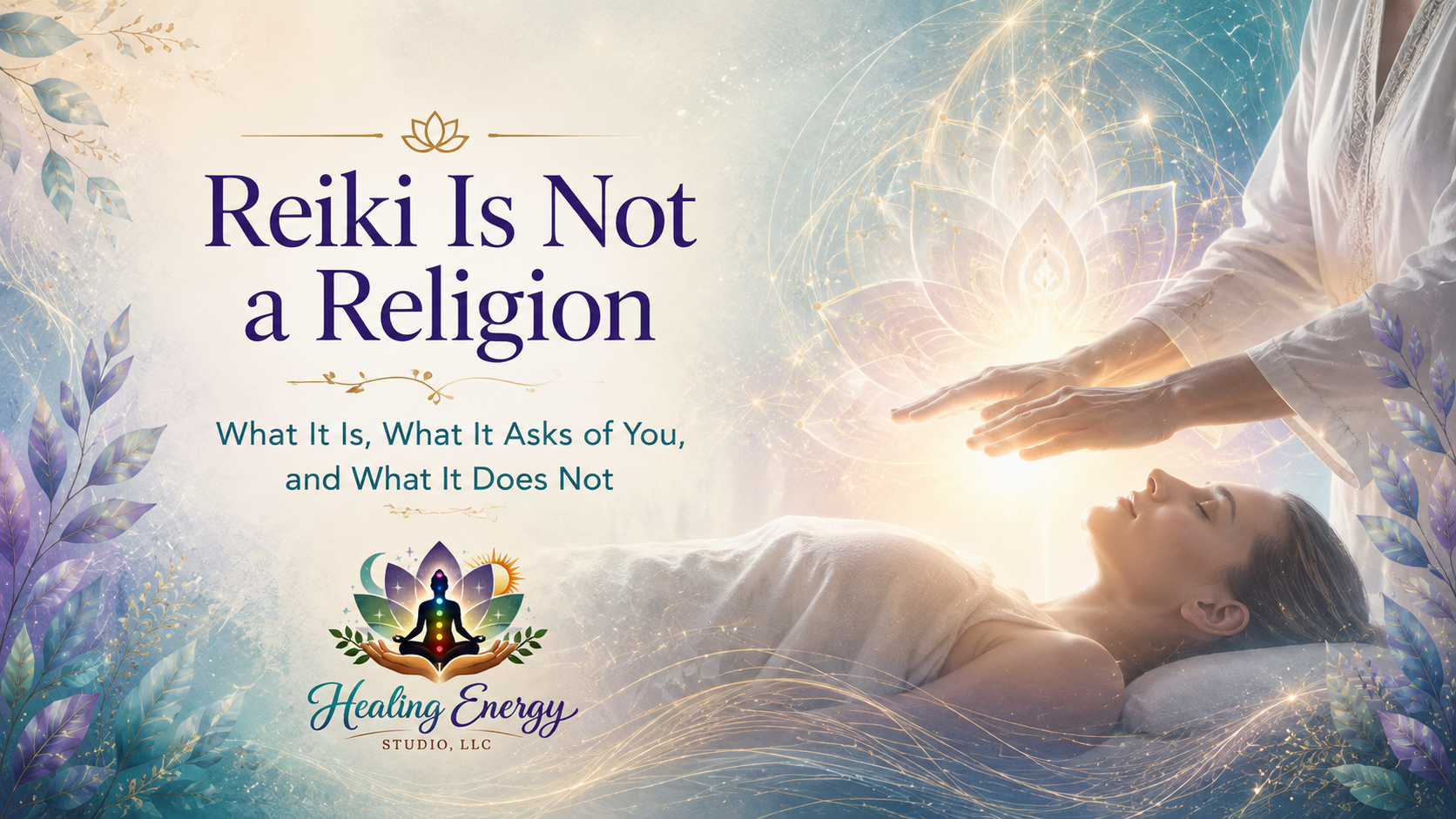
One of the questions people quietly carry into energy work is not really about Reiki technique at all.
It is about faith.
Is Reiki a religion? Does receiving Reiki mean participating in someone else’s spiritual beliefs? Do you have to believe in chakras, spirit guides, reincarnation, Buddhism, or anything else in order for a session to make sense?
For people with strong religious backgrounds, those questions can matter deeply.
So I want to answer them clearly.
Reiki is not a religion.
It has spiritual roots and can be practiced in a deeply spiritual way, but it does not require worship, doctrine, conversion, membership, or belief in a particular deity.
WHAT REIKI ACTUALLY IS
Reiki is a Japanese system of spiritual practice and hands-on or hands-near healing that developed through Mikao Usui in the early twentieth century.
In a typical session, the practitioner places hands lightly on or just above the body and allows Reiki to flow with the intention of supporting balance, relaxation, and the recipient’s natural healing response.
That definition does not involve religious conversion or doctrine because neither is required for the practice.
Traditional Reiki teachings include meditation, self-practice, ethical precepts, and spiritual development. Those elements can feel spiritual because they are.
Spiritual, however, does not automatically mean religious.
SPIRITUALITY AND RELIGION ARE NOT THE SAME THING
Religion generally involves an organized system of beliefs, teachings, rituals, community, and often a particular understanding of God or the sacred.
Spirituality can be much broader.
A person may experience spirituality through prayer, nature, meditation, art, service, intuition, silence, religious worship, or a felt relationship with something larger than themselves.
Reiki can sit within that wider spiritual space without asking a person to leave their own faith behind.
A Christian can receive Reiki.
A Buddhist can receive Reiki.
A Muslim, Hindu, Jewish, agnostic, atheist, or spiritually curious person can receive Reiki.
Receiving Reiki does not require adopting the practitioner’s worldview.
WHAT REIKI ASKS OF THE PERSON RECEIVING IT
Very little.
You do not have to understand Reiki.
You do not have to “believe hard enough.”
You do not have to visualize correctly.
You do not have to pray to anyone.
You do not have to accept a new theology.
You can simply rest and receive the session.
That simplicity is one of the things I appreciate most about Reiki.
The recipient does not need to perform spirituality for the practitioner.
WHAT ABOUT THE REIKI PRECEPTS?
Mikao Usui’s system included a set of ethical or contemplative principles commonly known as the Reiki precepts.
Translations vary, but they generally encourage practitioners not to be consumed by anger or worry, to practice gratitude, work honestly, and be kind to others.
Those are spiritual principles, but they are not a creed.
They do not tell a person which God to worship.
They do not tell a person what happens after death.
They do not require rejection of another religion.
They function more like a daily practice of character and awareness.
REIKI DOES NOT REQUIRE CALLING IN SPIRITS OR BEINGS
This is an important distinction because modern energy-healing communities are diverse.
Some practitioners incorporate angels, guides, ancestors, crystals, oracle cards, chakra systems, prayer, or other spiritual practices into their work.
Those practices may be meaningful to them.
But they are not required in order for something to be Reiki.
A Reiki session can be very simple: practitioner, recipient, intention, hands, quiet, and Reiki.
That matters because sometimes people encounter one practitioner’s personal spiritual style and assume that everything surrounding the session is part of Reiki itself.
It is not necessarily so.
A practitioner’s additions are not the same thing as the core practice.
CAN REIKI FIT WITH CHRISTIANITY OR ANOTHER FAITH?
Different religious communities answer that question differently, and I would never tell someone what their faith must permit.
That is a conversation a person may want to have with their own clergy, spiritual adviser, or conscience.
What I can say is that Reiki itself does not require a person to worship another deity, renounce their religion, or accept a competing religious doctrine.
Many people understand Reiki as a form of compassionate, prayerful, or spiritually grounded care that fits comfortably alongside their existing beliefs.
Others prefer not to participate in any energy-healing practice for theological reasons.
Both choices deserve respect.
I do not think anyone should be pressured spiritually in order to receive care.
WHAT REIKI DOES NOT ASK ME TO DO AS A PRACTITIONER
Reiki does not ask me to diagnose disease.
It does not ask me to replace someone’s physician, therapist, medication, church, or spiritual community.
It does not require me to tell a client what they should believe.
It does not give me authority over another person’s spiritual life.
My role is to create a grounded, compassionate space and practice Reiki within the scope of what I actually offer.
That boundary is important to me.
A person should be able to receive support without feeling that their beliefs are being recruited, corrected, or judged.
WHY REIKI CAN FEEL SPIRITUAL EVEN WITHOUT RELIGION
Reiki sessions are often quiet.
People slow down.
They notice their breathing.
They notice sensations in the body.
They may feel warmth, tingling, emotion, stillness, peace, or a sense of connection.
Those experiences can feel spiritual because deep stillness itself can feel spiritual.
We do not always need to turn that experience into a doctrine.
Sometimes a moment of peace is simply a moment of peace.
Sometimes it feels like prayer.
Sometimes it feels like energy.
Sometimes it feels like the nervous system finally softening.
Sometimes the person has no words for it at all.
I am comfortable leaving room for that mystery.
WHAT SCIENCE SAYS—AND DOES NOT SAY
Reiki is also studied as a complementary health practice.
That scientific uncertainty does not turn Reiki into a religion.
It simply means that the mechanism and clinical effects remain questions for research.
Science and religion answer different kinds of questions.
Reiki does not need to be classified as one simply because science has not fully explained the other.
THE SIMPLEST WAY I CAN SAY IT
Reiki is a spiritual healing practice, not a religion.
You can bring your faith with you.
You can bring your questions with you.
You can bring no particular spiritual belief at all.
You do not have to become anything new in order to receive Reiki.
And for me, that openness is part of what makes the practice so beautiful.
SOURCES FOR CURIOUS READERS
National Center for Complementary and Integrative Health. Reiki.
Vitale A. Reiki: Defining a Healing Practice for Nursing. 2020.

Reiki: Where It Came From and How a Japanese Healing Practice Spread Around the World
Reiki began in Japan in the early twentieth century and traveled through teachers, lineages, and cultures to become a global healing practice. Explore Mikao Usui, the Reiki precepts, how Reiki spread, and what has changed along the way.
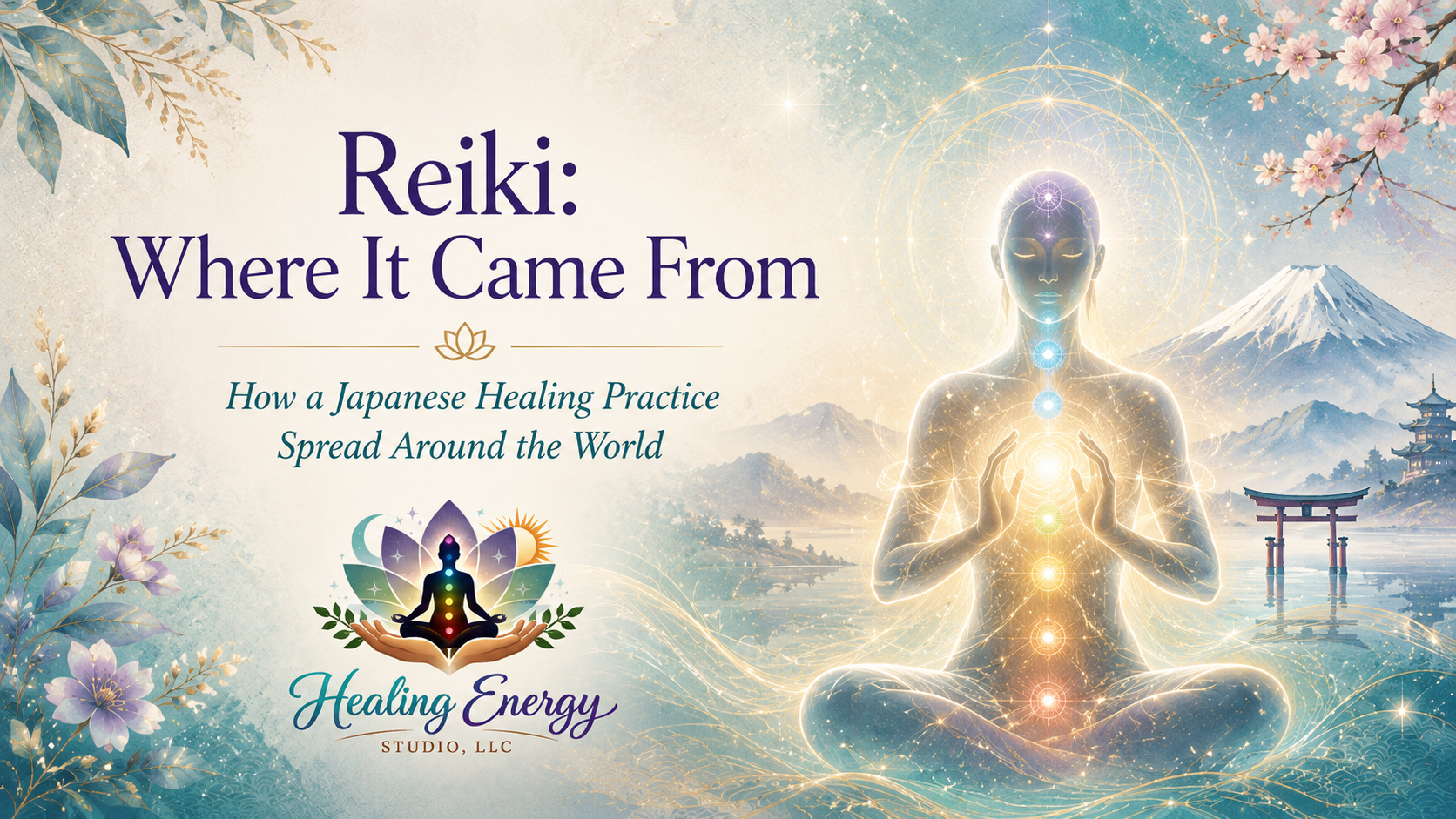
Reiki is often described today as an energy-healing practice, but that simple description leaves out a fascinating history.
It began in Japan in the early twentieth century and is most closely associated with Mikao Usui, a Japanese spiritual practitioner and teacher. From there, Reiki traveled through students and lineages, crossed cultures and languages, and eventually became one of the most widely recognized energy-healing practices in the world.
Understanding that history matters because Reiki did not appear out of nowhere, and it was not created as a modern wellness trend.
It developed in a particular cultural and spiritual context.
WHO WAS MIKAO USUI?
Mikao Usui was born in Japan in 1865 and is generally recognized as the founder of the system that later became known internationally as Reiki.
Historical accounts differ on some details of his life, and Reiki traditions have sometimes passed stories orally that are difficult to verify. What is consistent across modern historical reviews is that Usui developed a system of spiritual practice and healing in Japan in the early 1920s.
Usui’s system included more than hands-on healing. It also included meditation, personal discipline, ethical principles, spiritual development, and practices intended to cultivate awareness and balance.
That is important because modern Reiki is sometimes reduced to “putting hands over someone.” Historically, it was a broader practice.
THE REIKI PRECEPTS
One of the best-known parts of Usui’s system is a short set of guiding principles often called the Reiki precepts.
Different schools translate them differently, but they commonly center on themes such as not giving oneself over to anger or worry, practicing gratitude, working honestly, and treating others with kindness.
These are not doctrines that require membership in a religion.
They are ethical and contemplative practices.
For many Reiki practitioners, the precepts are as important as the hands-on work because they point to the idea that healing begins with how we live, respond, and relate to the world.
HOW DID REIKI SPREAD?
Usui taught students in Japan. One of the most influential was Chujiro Hayashi, a retired naval officer and physician who developed a more structured clinical approach to Reiki practice and training.
Hayashi later taught Hawayo Takata, a Japanese-American woman born in Hawaii who became enormously important to Reiki’s spread outside Japan.
Takata brought Reiki to Hawaii and the continental United States and trained students who went on to teach others.
This transmission through teachers and students is why Reiki practitioners often speak about lineage.
A Reiki lineage is essentially the chain of teachers connecting a practitioner back through earlier teachers to the practice’s Japanese roots.
Lineage does not mean every modern Reiki school teaches exactly the same way.
Quite the opposite.
As Reiki moved through countries and cultures, different schools developed different language, symbols, teaching structures, spiritual interpretations, and styles of practice.
WHAT DOES THE WORD “REIKI” MEAN?
The Japanese word is usually written with two characters: rei and ki.
In modern Reiki teaching, “rei” is often translated as universal or spiritual, while “ki” refers to vital energy or life energy.
That is why Reiki is commonly translated into English as “universal life energy” or “universal life-force energy.”
Translations are never perfect, especially when spiritual and philosophical concepts cross languages.
The important point is that ki is related to the broader East Asian concept of vital energy—the same family of ideas discussed as qi in Chinese traditions.
REIKI WAS SHAPED BY JAPANESE CULTURE
To understand early Reiki, it helps to remember the Japan in which Usui lived.
Japanese spiritual life included influences from Buddhism, Shinto, meditation traditions, martial disciplines, folk healing, and practices concerned with cultivation of mind and spirit.
Reiki emerged within that cultural landscape.
That does not mean Reiki itself is Buddhism or Shinto.
It means spiritual practices are always shaped by the cultures around them.
When Reiki later moved into Western countries, some of its language changed. New explanations appeared. Chakra language became more common in some schools even though chakras come primarily from Indian traditions rather than classical Japanese Reiki.
That blending is one reason modern Reiki can look different from one practitioner to another.
WHAT HAPPENS IN A REIKI SESSION?
The basic practice is remarkably simple.
A practitioner places hands lightly on or just above the body with the intention of supporting balance, relaxation, and the recipient’s natural healing response.
That clinical description is intentionally neutral.
Traditional Reiki language describes the practitioner as allowing universal life-force energy to flow rather than forcing or directing a specific outcome.
Many practitioners describe Reiki less as “doing something to” a client and more as creating a space in which the body, mind, and spirit can receive support.
HOW TRAINING WORKS
Modern Reiki training is commonly divided into levels.
The exact structure varies by school, but many systems include a first level focused on self-treatment and hands-on practice, a second level that introduces symbols and distance practice, and an advanced or master level focused on deeper practice and teaching.
A distinctive part of Reiki training is the attunement or ignition process.
Traditional Reiki schools regard attunement as an energetic transmission from teacher to student that opens or strengthens the student’s ability to work with Reiki. Holy Fire III Reiki believes the attunements are direct from Source, removing the transmission from the teacher, thus eliminating any influence that teacher might have so the attunement remains the purest energy.
Within Reiki tradition, it is considered a central part of training rather than merely symbolic instruction.
I will be teaching Usui Holy Fire III Online Certification courses. These will be available in the Appointments area.
REIKI AND MODERN HEALTHCARE
As Reiki spread internationally, it also entered hospitals, hospice programs, nursing, cancer-support services, wellness centers, and private practices.
Peer-reviewed nursing literature has discussed Reiki as a complementary practice and has emphasized the need for healthcare professionals to understand what it is, how it is taught, and how patients may use it alongside conventional care.
That is part of the story too.
Reiki’s history is not the same thing as proof of clinical effectiveness.
A practice can have cultural, spiritual, and experiential significance while still being the subject of ongoing scientific study.
WHAT I FIND MOST INTERESTING ABOUT REIKI’S HISTORY
Reiki has survived more than a century of cultural change.
It moved from Japan to Hawaii, across the United States, throughout Europe, and into many other parts of the world.
It has been practiced in homes, hospitals, hospice rooms, meditation spaces, and private healing studios.
It has been interpreted spiritually, clinically, philosophically, and personally.
And yet the center of the practice remains surprisingly simple:
Be present.
Place the hands.
Allow rather than force.
Support balance.
Practice with intention and compassion.
For me, understanding the history makes Reiki feel less mysterious in one way and more meaningful in another.
It reminds me that Reiki is not a random collection of modern spiritual ideas.
It is a living practice with roots, teachers, traditions, and a history of people passing it from one person to another.
SOURCES FOR CURIOUS READERS
Vitale A. Reiki: Defining a Healing Practice for Nursing. 2020.
Lee MS, Pittler MH, Ernst E. A Systematic Review of the Therapeutic Effects of Reiki. 2009.
National Center for Complementary and Integrative Health. Reiki.

What Is Energy Healing, Really?
Energy healing has roots in traditions that long predate modern medicine, but science is now asking its own questions about biofields, electrical signaling, and the complex ways living systems communicate. Explore what we know, what traditions have taught, and what remains beautifully unexplained.
A Bridge Between Ancient Wisdom and Modern Inquiry
For most of human history, people have understood the body as more than simply a collection of organs, muscles, bones, and chemicals.
Different cultures developed different words for something that seemed to animate living beings: qi in Chinese traditions, prana in Indian traditions, ki in Japan, and other concepts of breath, spirit, vitality, or life force throughout the world.
Today, people who practice Reiki and other forms of energy healing may use words such as energy, life-force energy, subtle energy, biofield, vibration, frequency, or energetic balance.
Those words can sound strange if your only exposure to healing has been through conventional Western medicine.
But here is where the conversation becomes interesting.
Modern science also recognizes that the human body is not simply chemical. We are electrical. We generate measurable electromagnetic activity. Cells communicate through electrical as well as chemical processes. Our brains and hearts create signals strong enough to be measured outside the cells producing them.
None of that proves every traditional belief about energy.
But it does make the conversation about human energy much more interesting than simply dismissing it as “woo-woo.”
So What Is Energy Healing?
At its simplest, energy healing is based on the idea that the human being has an energetic component and that supporting balance within that system may support the whole person.
Different modalities approach this in different ways.
Reiki practitioners traditionally work with universal life-force energy. Healing Touch and Therapeutic Touch developed somewhat differently but also work from the idea of interacting with a person's energetic field. Qigong includes practices designed to cultivate and regulate qi. Other traditions work with chakras, meridians, breath, prayer, intention, sound, movement, or touch.
These traditions do not all mean exactly the same thing by “energy.”
That is important.
We sometimes try to take spiritual concepts developed over thousands of years and force them into a single modern scientific definition. They may overlap, but they do not necessarily describe the same phenomenon.
Science has developed its own language.
Researchers studying practices such as Reiki, Healing Touch, and Therapeutic Touch commonly use the term biofield therapies. A major review published in the International Journal of Behavioral Medicine described Reiki, Therapeutic Touch, and Healing Touch within this category and reviewed 66 clinical studies involving biofield therapies. The review reported promising findings in some areas—particularly pain—and more mixed evidence in others, while also emphasizing the need for stronger research.
The important point is not that science has solved the mystery.
It hasn't.
The important point is that people are studying it.
What Is a Biofield?
This is where the scientific and spiritual conversations begin moving closer together.
A group of researchers writing about biofield physiology proposed the biofield as a framework for studying spatially distributed fields that living systems generate and respond to.
Their discussion included things we already know exist, such as the electrical and magnetic activity produced by the heart and nervous system, along with less-understood phenomena such as ultraweak photon emissions from living cells.
We routinely measure some of these biological signals.
An ECG measures electrical activity associated with the heart.
An EEG measures electrical activity in the brain.
Magnetocardiography and magnetoencephalography can detect magnetic fields associated with cardiac and neural activity.
Researchers also study electrical patterns involved in development, cellular organization, tissue injury, and regeneration.
So when someone says, “The body has energy,” that statement is not inherently unscientific.
The much harder question is:
Does the measurable electrical and electromagnetic activity of the body explain what energy healers experience and work with?
We don't know.
And I think we don't know is an incredibly interesting place to begin.
Science and Spirituality Ask Different Questions
Science is designed to observe, measure, test, reproduce, and challenge ideas.
That has given humanity extraordinary knowledge.
But science can only investigate something once we have a way to observe or measure it.
That limitation does not make science inadequate. It simply means that scientific knowledge evolves alongside our ability to ask better questions and develop better tools.
Spirituality approaches life differently.
Spirituality allows us to experience something before we can explain it.
Love existed before we could watch parts of the brain respond to attachment.
Meditation existed thousands of years before researchers began measuring its effects on the nervous system and brain.
Human beings practiced breathing techniques, prayer, laying on of hands, fasting, movement, herbs, and other healing traditions long before laboratories existed.
Some traditional beliefs eventually find scientific explanations.
Some turn out to have been misunderstood.
Some remain mysteries.
I don't think we have to choose between those possibilities.
The Body May Be More Complex Than One Model Can Explain
One of the things I find fascinating about modern medicine is how much our understanding of the body continues to expand.
For a long time, biology was largely explained through chemistry: hormones, neurotransmitters, proteins, enzymes, DNA.
All of those things remain enormously important.
But researchers now also study bioelectric signaling, electromagnetic activity, psychoneuroimmunology, epigenetics, interoception, neuroplasticity, the microbiome, mind-body interactions, and many other systems that would have sounded very different in medical conversations generations ago.
Researchers have even proposed “biofield science” as an emerging discipline for investigating biological organization beyond purely molecular explanations.
That does not mean every proposed explanation is correct.
It means the conversation is still happening.
And that is exactly where curiosity belongs.
What About Reiki?
Reiki is one form of energy work, and it is the modality I use most frequently in my own practice.
During Reiki, a practitioner generally places their hands lightly on the body or holds them just above it with the intention of supporting the recipient's natural healing response.
The National Center for Complementary and Integrative Health describes Reiki as a complementary health approach based on the concept of energy supporting the body's natural healing abilities. NCCIH also notes that research results remain inconsistent and that the proposed Reiki energy itself has not been scientifically demonstrated.
I am comfortable holding both parts of that statement.
Science has not fully explained Reiki.
And Reiki has been experienced and practiced by people around the world regardless of whether we currently understand its mechanism.
Those ideas can coexist.
Experience Matters Too
This is one of the places where I differ from the idea that something has no value until science can explain exactly how it works.
Research matters.
Evidence matters.
Critical thinking matters.
But human experience matters too.
When someone lies on my Reiki table and feels warmth where my hands are not touching them, that experience matters to them.
When someone becomes deeply relaxed after arriving tense and overwhelmed, that matters.
When someone experiences an emotional release they did not anticipate, that matters.
It does not automatically tell us why it happened.
And it certainly doesn't mean that every sensation must have a supernatural explanation.
But curiosity allows us to ask the question instead of immediately dismissing the experience.
Maybe some of what happens during energy work involves the nervous system.
Maybe attention and intention matter.
Maybe the therapeutic environment matters.
Maybe expectation plays a role.
Maybe biological fields are involved.
Maybe consciousness itself has aspects we do not yet understand.
Maybe more than one of those things is true.
We Don't Have to Choose a Side
This series is going to explore that space.
We will look at Reiki research, biofields, nervous-system regulation, chakras, qi and prana, meditation, consciousness, epigenetics, intuition, healing traditions, hospital programs, oncology, prayer, the work of people such as Bruce Lipton, Joe Dispenza, and Sue Morter, and some of the questions science has not yet answered.
I am not interested in using science to prove spirituality.
And I am not interested in rejecting science because it cannot yet explain every spiritual experience.
I am interested in the bridge between them.
Because perhaps one of the most valuable things we can say about healing is:
There is a great deal we know. There is a great deal we are beginning to understand. And there is still a great deal that remains beautifully mysterious.
That feels like a very good place to begin.
A Few Sources for Curious Readers
Jain S, Mills PJ. Biofield therapies: helpful or full of hype? A best evidence synthesis. International Journal of Behavioral Medicine. The review evaluated 66 clinical studies of several biofield therapies and reported evidence ranging from promising to inconclusive depending on the outcome studied.
Hammerschlag R, Levin M, McCraty R, et al. Biofield Physiology: A Framework for an Emerging Discipline. The paper explores biological electromagnetic activity, bioelectric signaling, ultraweak photon emission, and the possibility of a broader biofield physiology framework.
Rubik B, Muehsam D, Hammerschlag R, Jain S. Biofield Science and Healing: History, Terminology, and Concepts. This paper examines the history and terminology of biofield concepts and their relationship to energy medicine.
The National Center for Complementary and Integrative Health also maintains an overview of Reiki and the current state of conventional scientific evidence.